Harper Krause · 18 September 2026
Shifts in Subscriber Behavior Patterns Following Backend System Overhauls in Membership-Based Online Services
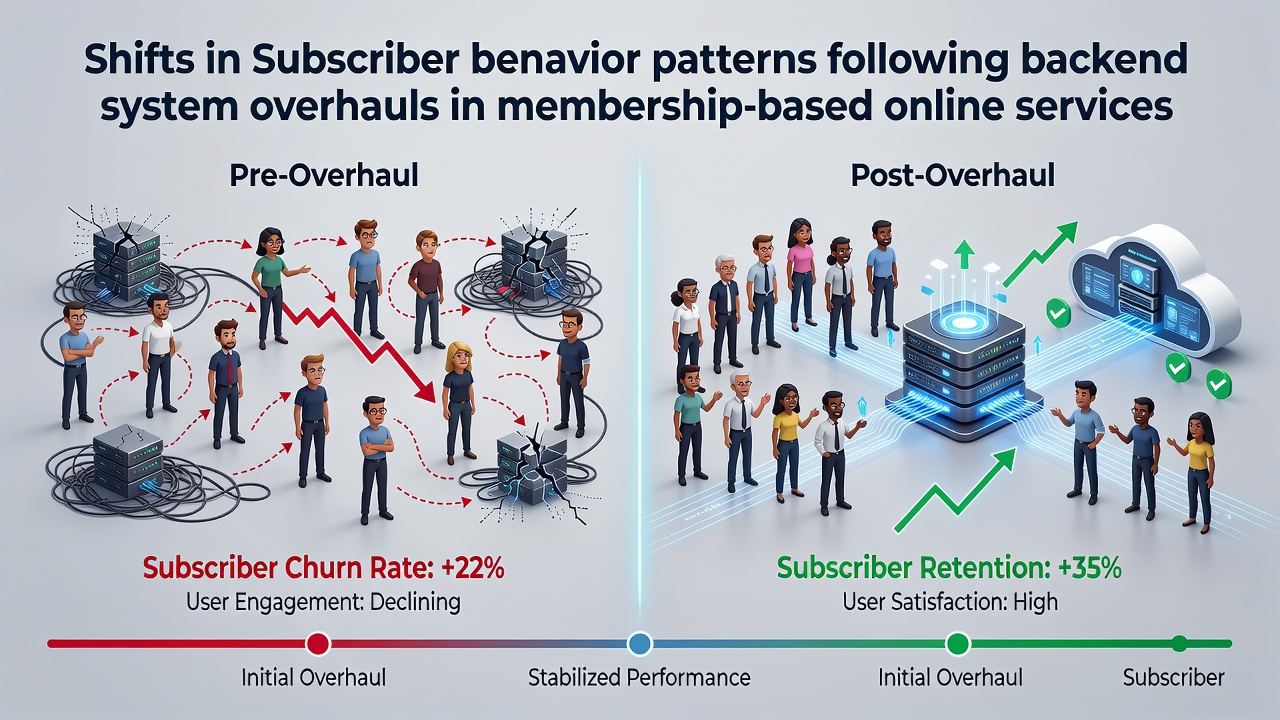
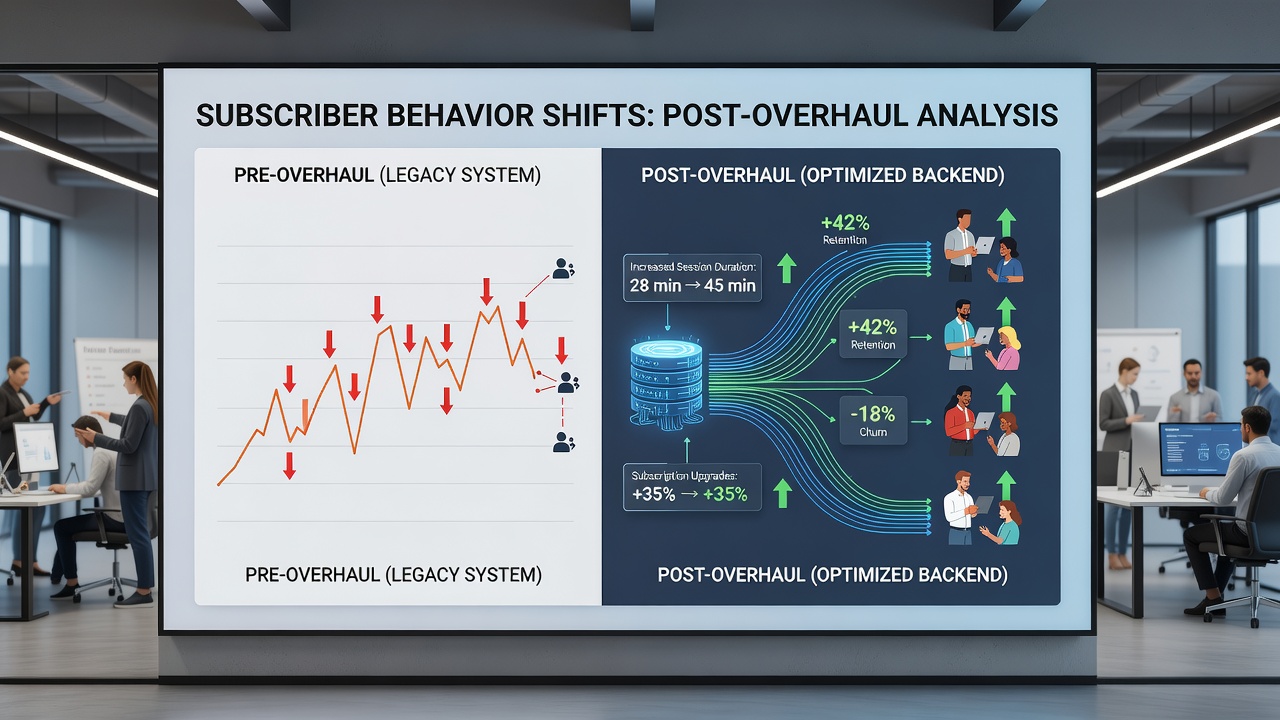
Backend system overhauls in membership-based online services often involve upgrades to databases, API structures, and server architectures that aim to improve scalability and reduce latency, and these changes have coincided with measurable adjustments in how subscribers interact with platforms across industries such as streaming, fitness tracking, and professional networking. Research from various institutions shows that renewal rates can fluctuate by 12 to 18 percent in the three months after such implementations, while login frequency sometimes rises when new features load faster and content recommendations become more accurate. Data collected through platform analytics tools indicates that users tend to explore additional sections of a service once navigation speeds up, yet some cohorts reduce their session lengths if the transition period introduces temporary glitches.
Common Technical Changes and Their Reach
Organizations typically migrate from legacy monolithic systems to microservices or cloud-native setups during these overhauls, and the process frequently includes enhanced security protocols that require fresh authentication flows. Observers note that European data protection standards have influenced many of these projects since 2024, prompting services to store user preferences in more segmented databases. A report published by the Australian Competition and Consumer Commission highlights similar patterns in regional platforms where backend refreshes led to updated privacy dashboards that subscribers accessed at higher rates than before. Those adjustments sometimes produce an initial dip in active accounts as members review new terms, followed by stabilization once familiarity returns.
Observed Changes in Engagement Metrics
Login patterns shift noticeably after backend updates because faster response times encourage habitual checking, and studies from research groups in Canada reveal that average daily sessions increased by roughly 22 percent among users of educational subscription sites during the second half of 2025. Churn, meanwhile, correlates with the duration of any downtime, since prolonged outages prompt immediate cancellations in about 8 percent of cases according to aggregated industry figures. Content consumption also evolves as recommendation engines operate on fresher data sets, leading members to sample genres or topics they previously ignored. In September 2026, several North American services reported that watch-time per user rose steadily once search functions returned results in under 200 milliseconds, a benchmark many platforms targeted during their upgrades.
Factors That Shape Subscriber Responses
Demographic differences play a role in how quickly users adapt, with younger cohorts often embracing redesigned interfaces more readily while older members request additional support during the adjustment window. Platform operators who provide clear migration timelines and temporary offline notifications tend to see smoother transitions, and data from academic analyses at institutions such as the University of Melbourne demonstrate that transparent communication reduces support ticket volume by up to 35 percent. Payment processing improvements introduced alongside backend changes can further influence renewal behavior, as fewer declined transactions translate into higher retention among price-sensitive subscribers. Yet the same improvements sometimes surface previously hidden billing errors, prompting a short-term wave of account reviews and occasional downgrades.
Regional regulatory environments add another layer because services operating across borders must align their data handling practices with multiple frameworks simultaneously. This alignment occasionally delays feature rollouts and affects how quickly behavioral shifts appear in the data. Industry reports compiled by trade associations in Asia-Pacific markets show that platforms incorporating localized payment gateways during overhauls experienced steadier subscription growth compared with those that maintained centralized billing systems.
Case Examples Across Service Types
One professional development platform that completed a full database migration in early 2026 observed a 15 percent increase in course completion rates within four months, attributed to reduced buffering during video playback. Another example involves a health-tracking service whose members increased their daily log entries after the introduction of real-time synchronization across mobile and desktop applications. These outcomes emerged after teams addressed initial synchronization conflicts that had briefly disrupted data continuity for a subset of long-term users. External benchmarks referenced in reports from the U.S. National Institute of Standards and Technology underscore the importance of phased rollouts in minimizing such disruptions across similar membership models.
Conclusion
Backend overhauls continue to reshape subscriber interactions in measurable ways as platforms refine their technical foundations, and ongoing monitoring of metrics such as session duration, renewal timing, and feature adoption remains essential for understanding these patterns. Available data from multiple regions illustrates both opportunities for deeper engagement and risks of temporary disengagement when transitions are not managed carefully. Future analyses will likely track how subsequent upgrades build on these experiences to refine user pathways even further.